
In an era where artificial intelligence is steadily transforming the architecture of modern work, leadership is no longer defined by...
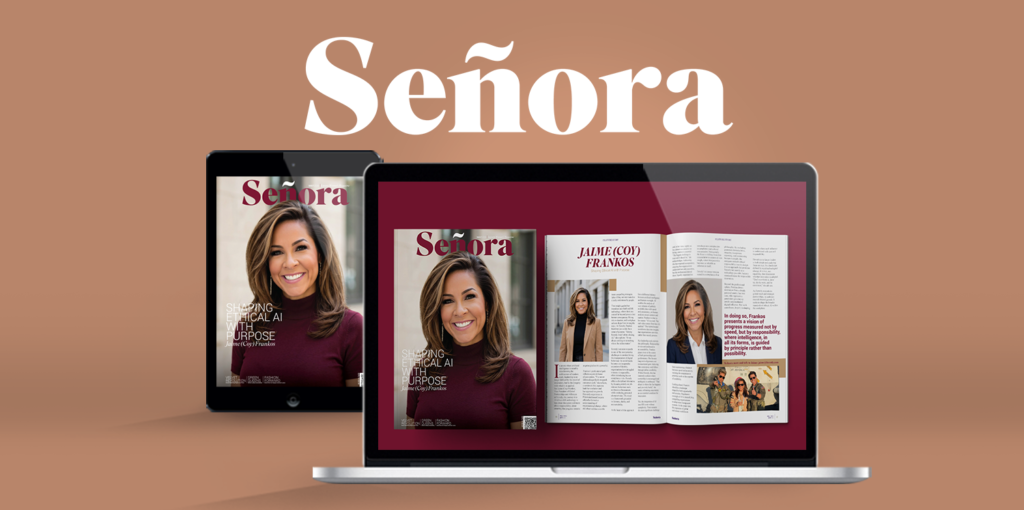
In an era where artificial intelligence is steadily transforming the architecture of modern work, leadership is no longer defined by the speed of innovation, but by the integrity with which it is applied. For Jaime (Coy) Frankos, Vice President of Global Partnerships and Alliances at Ferretly, the journey into AI-driven HR technology is less about disruption and more about responsibility, about ensuring that progress remains as principled as it is powerful.
Frankos’s professional path reflects a quiet defiance of convention. “I’ve never followed a perfectly mapped-out career path,” she reflects, a sentiment that captures both her evolution and her approach to growth. Her early experience at PricewaterhouseCoopers offered a formative understanding of organisational change, where she observed that even the most compelling strategies falter if they are not trusted or clearly understood by people.
This insight guided her transition into SaaS and HR technology, where decisions extend far beyond process into human consequence. Hiring, risk evaluation, and workplace culture shape lives in tangible ways. At Ferretly, Frankos found not just a role, but a sense of purpose. “Joining Ferretly wasn’t about chasing AI,” she explains. “It was about working on something where the stakes matter.”
Ferretly’s mission responds to one of the most pressing challenges in modern hiring, the interpretation of digital behaviour. As social media becomes an inseparable extension of identity, organisations have struggled to assess it responsibly, often introducing bias or compliance risks. Ferretly offers a disciplined alternative by focusing strictly on job-relevant behaviour, such as threats or harassment, while excluding protected characteristics. The result is a framework grounded in fairness, clarity, and accountability.
At the heart of this approach lies a deliberate balance between artificial intelligence and human oversight. AI enables the analysis of vast volumes of publicly available data with speed and consistency, yet human analysts ensure context and nuance. Frankos is clear in her stance: “AI is a tool. The real value comes from how it’s applied.” This hybrid model transforms data into insights that organisations can trust, rather than merely process.
Her leadership style mirrors this philosophy. Relationship-driven and anchored in accountability, Frankos places trust at the centre of both partnerships and performance. She favours long-term alignment over transactional gain, believing that consistency and follow-through define credibility. Within Ferretly, this has fostered a culture where ownership is encouraged and ambiguity is embraced. “That chaos is where the fun happens and you truly build,” she notes, reframing uncertainty as an essential condition for innovation.
Yet, the integration of AI into HR is not without complexity. Trust remains the most significant challenge and, in her view, rightly so. In a domain as sensitive as hiring, caution is essential. “The biggest challenge is trust and it should be,” she acknowledges. Addressing this has required transparency, ensuring that organisations understand not only outcomes, but the mechanisms behind them. Equally important has been maintaining a balance between speed and accuracy, resisting the temptation to prioritise scale at the expense of credibility.
Looking ahead, Frankos identifies a landscape shaped by both opportunity and scrutiny. Regulatory oversight of AI is intensifying, compelling organisations to adopt more transparent systems. At the same time, the expansion of global and remote workforces introduces new complexities in compliance and cultural interpretation. Increasingly, the focus is shifting from data accumulation to context-driven insight, where interpretation becomes as valuable as information itself.
Ferretly’s response remains rooted in a compliance-first philosophy. By excluding protected characteristics, ensuring transparent reporting, and maintaining human oversight, the company embeds ethical responsibility into its design. It is an approach that positions Ferretly not merely as a technology provider, but as a standard-bearer for responsible innovation.
Beyond the professional sphere, Frankos draws motivation from a deeply personal source, her two sons, who represent a generation growing up amidst unprecedented digital influence. Her work contributes, in part, to shaping a future where such influence is understood with care and responsibility.
Her advice to future leaders is both simple and enduring: focus on trust. In a landscape defined by rapid technological change, it is trust, not capability, that determines whether innovation is adopted. “Don’t overthink it, show up, do the work, and be consistent,” she advises.
As Ferretly expands its global reach and strategic partnerships, its ambition extends beyond growth. It seeks to shape the broader standards of ethical AI within the workplace. In doing so, Frankos presents a vision of progress measured not by speed, but by responsibility, where intelligence, in all its forms, is guided by principle rather than possibility.














Leave a Comment
Your email address will not be published. Required fields are marked with *