
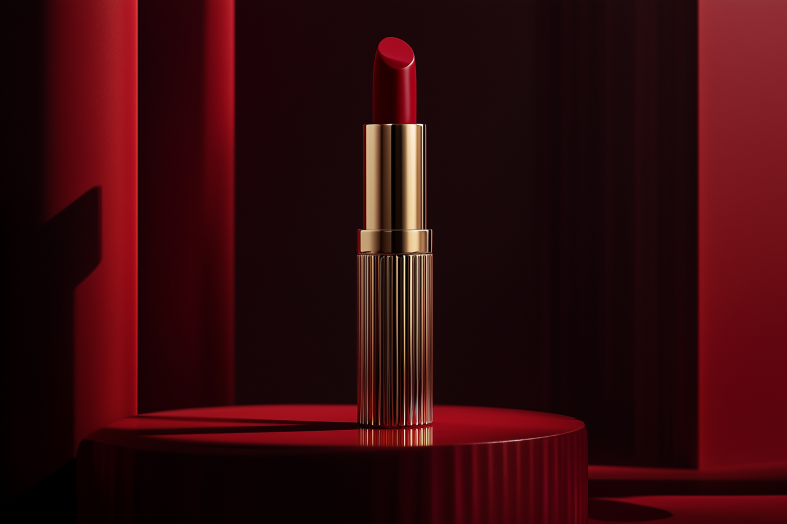
How Feminine Expression is Reclaiming Power, One Shade at a Time It begins, often, with a quiet ritual. A woman...
How Feminine Expression is Reclaiming Power, One Shade at a Time
It begins, often, with a quiet ritual. A woman leans toward the mirror, the world hushed behind her, and draws a line of color across her lips. It could be crimson or coral, barely-there nude or bold electric plum. But the motion is more than cosmetic it’s ancestral. It’s a reclamation. A declaration. A memory. A future.
For centuries, lipstick has been dismissed as frivolous a symbol of vanity, seduction, or conformity. But today, in cities as varied as Tokyo, Johannesburg, Milan, and Mumbai, women are reclaiming lipstick not just as an aesthetic choice but as a cultural artifact — one that tells stories of defiance, resilience, identity, and self-authoring power.
This is not just about makeup. This is about meaning.
To wear lipstick is to engage in a silent protest: against invisibility, against conformity, against erasure. And in this post-pandemic world, where the act of being seen — truly seen — carries renewed significance, women are turning to lipstick not to impress others, but to return to themselves.
Historically, the politics of lipstick have been tangled in contradiction. During wartime, red lips were a sign of patriotism. In religious circles, they were condemned. In fashion, they were a symbol of glamour. In activism, a sign of resistance. From Cleopatra’s crushed carmine beetles to Frida Kahlo’s cherry pout to Angela Davis’s unapologetic expression during civil rights protests lipstick has whispered, shouted, and sung across centuries.
Today, it sings again.
Across the globe, women are crafting their identities in shades that do not apologize. In Lagos, young entrepreneurs are formulating organic lip color using native botanicals, reintroducing beauty standards rooted in African heritage. In Seoul, where the K-beauty wave has global influence, soft gradients are evolving into bold, individualist statements. In Mexico City, feminist collectives are using bright lipstick as part of protest theatre, reclaiming public spaces with choreography and color.
And in Paris, Tokyo, and Toronto, women are doing something even more radical putting on lipstick with no occasion at all.
In a world that still questions feminine expression, every tube of lipstick becomes a tiny act of rebellion. Especially for women in positions of power.
When Chantel Moreau, a tech investor in Luxembourg, testifies in courtrooms or pitches in all-male boardrooms, she wears matte red. Not to attract attention but to remind herself of lineage. “My mother wore the same shade to protests in the ’70s. It’s not just pigment. It’s armor,” she tells Señora.
Or take Tara Misaki, a Tokyo-based AI ethicist who co-founded a beauty-tech lab that scans mood and recommends lip shades based on emotional alignment. “We’re not selling beauty,” she insists. “We’re selling agency.” Her app has been downloaded over a million times not by influencers, but by schoolteachers, engineers, retirees. Women whose lives don’t always make headlines, but who choose every day to show up in full color.
There is something uniquely luxurious about choice — and perhaps that’s where lipstick finds its power. Not in the need to wear it. But in the freedom to.
In countries where women’s freedom of expression is restricted, even the act of applying lipstick behind closed doors becomes defiant. Iranian filmmaker Shirin Delaram, now based in Berlin, recalls watching her mother carefully apply a forbidden rose shade in the mirror each morning, even though she would later veil her face in public. “It was her way of saying, ‘I am still here.’”
Lipstick, then, becomes legacy. A message passed from one generation to the next not always through words, but through action. It becomes a bonding ritual between mothers and daughters, sisters and friends, icons and admirers. It carries scent, memory, softness, steel.
But this revolution isn’t just happening on vanities. It’s happening on runways, in laboratories, at universities, and in courtrooms. Luxury beauty brands are being challenged to reflect inclusivity offering pigments for every skin tone, and messages that don’t condescend. Independent creators are producing limited-edition lipsticks with profits funding women’s shelters, menstrual equity, and refugee support.
This is what happens when beauty meets purpose.
And while many are quick to reduce makeup to market it’s important to remember: lipstick has outlived empires. It has survived censorship, colonization, capitalism, and cultural bias. Through it all, it remained a tool of reinvention proof that the most intimate rituals often hold the greatest power.
So what is the legacy of lipstick? Perhaps it is not found in glossy ads or glamorous red carpets but in quiet mornings, busy afternoons, fierce debates, tender phone calls, and solo walks to the café. It lives in that private moment when a woman, meeting only herself in the mirror, says: I deserve to be seen.
In that moment, lipstick becomes less about how you look and more about how you feel. It becomes a manifesto. A silent anthem. A mirror of memory and imagination.
In that moment, a woman becomes her own icon.
And so, in the pages of Señora, we honor not just the makers of lipstick, but the wearers. The ones who built businesses, nurtured revolutions, raised futures, survived silence and still had the courage to wear red.
Because lipstick, like power, is personal.
And the most powerful legacy a woman can leave… is to show up as herself.







Leave a Comment
Your email address will not be published. Required fields are marked with *