
In an era shaped by technological transformation, where artificial intelligence and consumer personalization are no longer just trends but strategic...
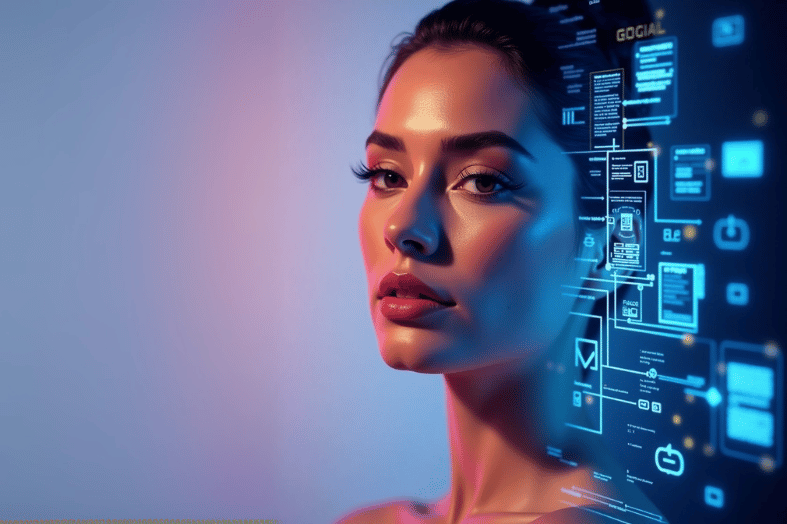
In an era shaped by technological transformation, where artificial intelligence and consumer personalization are no longer just trends but strategic necessities, two global giants L’Oréal and NVIDIA have come together to reimagine the future of beauty. This landmark collaboration represents far more than a convergence of industries. It symbolizes a seismic shift in how luxury, technology, and sustainability can coexist to offer experiences that are personalized, responsible, and visionary.
While L’Oréal stands as a global leader in cosmetics and skincare, NVIDIA has carved its space as a trailblazer in the world of accelerated computing, AI, and graphics technology. Together, their partnership marks a powerful step forward in the evolution of beauty tech, where innovation isn’t just skin deep, but intelligently woven into every layer of the consumer journey.
The beauty industry has historically been rooted in transformation aesthetic, emotional, and now digital. Over the last decade, consumer expectations have undergone a radical shift. Beauty is no longer about standardized products and one-size-fits-all experiences. Instead, consumers today expect hyper-personalization, ethical sourcing, inclusivity, and real-time engagement. The rise of smart skincare tools, AR mirrors, and AI-driven recommendations are testimony to how technology is becoming a cornerstone of the beauty industry.
L’Oréal, well ahead of the curve, has invested heavily in digital innovation over the past few years. From acquiring ModiFace in 2018 a leader in AR try-on experiences to building sophisticated skin diagnostic tools, L’Oréal has redefined itself as more than a beauty brand. It’s now a tech-first beauty powerhouse. The partnership with NVIDIA takes this transformation even further, enabling immersive, AI-powered consumer experiences and research capabilities through the power of NVIDIA Omniverse and generative AI.
At the core of this collaboration lies NVIDIA Omniverse, a real-time 3D collaboration and simulation platform. While originally designed for fields like architecture, gaming, and robotics, L’Oréal has become the first beauty brand to harness its capabilities for cosmetics innovation.
Through Omniverse, L’Oréal’s scientists, designers, and AI researchers can simulate everything from product texture to skin interaction, building a virtual environment that mirrors real-life beauty experiences with scientific precision. These simulations aren’t just for internal use they translate directly into consumer-facing tools. Imagine a virtual store where users can see how makeup interacts with their skin under different lighting conditions or weather environments, or test how a skincare product might impact their skin over time.
It’s the democratization of beauty experiences available to anyone, anywhere, with real-time, photorealistic results.One of the most exciting outcomes of the L’Oréal x NVIDIA partnership is the integration of generative AI into beauty science. Generative AI doesn’t just analyse data it creates. It generates content, simulations, predictions, and highly specific outputs based on large data inputs.
In L’Oréal’s ecosystem, generative AI can:
•Design custom skincare regimens based on environmental, genetic, and lifestyle factors.
•Simulate aging models to offer preventative solutions.
•Recommend makeup shades adapted to skin tone, lighting, and even emotional state (such as stress-induced redness).
These are not futuristic dreams. L’Oréal has already built working prototypes powered by NVIDIA’s technology, offering real-time diagnostics through smartphone cameras and personalized suggestions based on deep-learning models.
One of the most persistent criticisms of AI systems across industries is bias, particularly when systems fail to perform accurately across different races, genders, and skin tones. L’Oréal, in collaboration with NVIDIA, is actively addressing this challenge.
By training AI models on diverse datasets that include a wide spectrum of skin tones, ages, and facial features, they ensure that the technology is inclusive and representative. L’Oréal’s AI can now more accurately detect pigmentation, acne, hydration, and texture across skin types that are often overlooked by traditional diagnostic systems.
In practice, this means a user in Lagos, New Delhi, London, or São Paulo can receive the same level of accuracy and personalization, regardless of skin tone or environmental conditions. Beyond consumer-facing tools, the partnership revolutionizes L’Oréal’s internal research and development process. Thanks to NVIDIA’s computing infrastructure, L’Oréal can simulate product performance in a virtual environment, reducing dependency on physical samples, animal testing, or large-scale prototyping.
For example:
•A new foundation formula can be rendered on dozens of digital avatars with varying skin tones and textures.
•AI can simulate its coverage, finish, and wear across lighting types.
•Feedback from real consumers can be integrated into the model to refine future formulas.
This dramatically shortens product development cycles, accelerates time-to-market, and aligns with L’Oréal’s pledge to make its operations more environmentally conscious.
L’Oréal’s commitment to sustainability is well established through its “L’Oréal for the Future” program, which outlines bold goals for reducing water consumption, carbon emissions, and packaging waste. The collaboration with NVIDIA complements these efforts by integrating sustainability into the design and simulation phase.
Digital product testing means:
•Fewer physical prototypes = less material waste
•Smarter supply chains = better forecasting and reduced overproduction
•Reduced returns = thanks to better product-consumer matching
It also supports circular economy models where products are more responsibly produced and distributed based on actual consumer behaviour, rather than outdated mass-production assumptions.
The modern consumer doesn’t just buy a product they engage with a brand across multiple channels: online, in-store, mobile, and increasingly, in the metaverse. With NVIDIA’s rendering capabilities, L’Oréal can now build immersive, branded digital environments whether it is a virtual fragrance room, an AR-powered skincare consultation, or a personalized beauty universe inside a metaverse space.
These experiences help consumers build emotional connections with the brand while also providing actionable insights into their needs, preferences, and routines.
As AI becomes more embedded in beauty, questions around data privacy, consent, and algorithmic transparency become increasingly relevant. L’Oréal and NVIDIA have emphasized a shared commitment to ethical AI development.
This includes:
•Clear disclosures about data usage
•Opt-in systems for facial scanning or diagnostic tools
•Transparent algorithms designed to avoid bias
•No sale of consumer data to third-party platforms
By integrating these principles from the outset, the partnership ensures that innovation doesn’t come at the cost of trust.
What sets the L’Oréal x NVIDIA partnership apart is not just the scope of innovation, but the values behind it. Both brands are driven by a commitment to purpose-driven leadership, and the results speak for themselves.
In a world where consumers increasingly expect brands to take a stand on climate change, inclusivity, and ethical use of technology this collaboration positions L’Oréal as not just a leader in beauty, but a trailblazer in the future of consumer technology.
This partnership is more than a collaboration between two companies it is a blueprint for the next generation of business. One where beauty is powered by data, enhanced by AI, guided by ethics, and accessible to everyone. Where science meets storytelling. Where purpose meets prestige, and where brands do not just sell products, they design experiences that evolve, empower, and inspire.
As we move into an age of intelligent beauty, L’Oréal and NVIDIA are proving that the future is not just about looking good — it is about doing good, too.









Leave a Comment
Your email address will not be published. Required fields are marked with *